New Mexico Tech Mechanical Engineering students send their work into orbit
Oct. 25, 2024
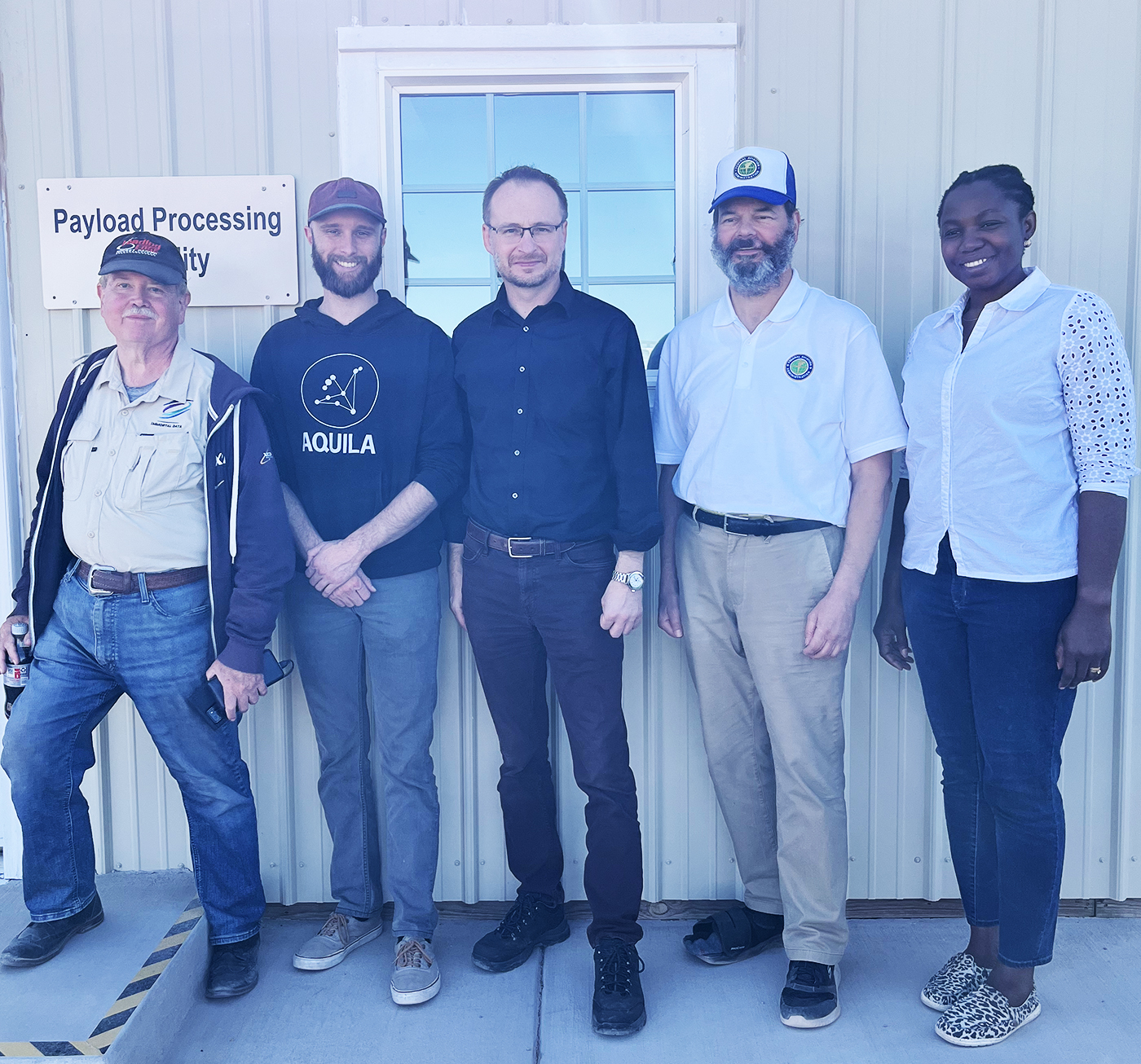
From left, Dale Amon, COE of Immorta Data Inc., Dillon Cvetic-Thomas (NMT graduate involved in design and development of the payload), Andrei Zagrai, Nickolas Demidovich, (Federal Aviation Administration program manager), and Funmilola Nwokocha (PhD student who designed and conducted experiments for the payload as a part of her PhD dissertation).
SL15, a suborbital spaceflight experiment designed and built by New Mexico Tech in collaboration with New Mexico small business Immortal Data Inc., went into orbit on Oct. 1 from the world’s first purpose-built commercial spaceport, located near Truth or Consequences, N.M.
Immortal Data, a Las Cruces, N.M.-based company, was the builder of a payload for New Mexico Tech’s experiment on spacecraft health monitoring and real-time systems. Immortal Data also tested and collected environmental data on some of its own equipment as it relates to product development.
“New Mexico Tech was part of a previous FAA-sponsored initiative known as the Center of Excellence for Commercial Space Transportation (COE CST) to improve flight safety and vehicle cost reduction,” said Dr. Andrei Zagrai, a New Mexico Tech mechanical engineering professor. “Our part on this payload, which was developed under COE CST, is to provide structural health monitoring data. Both the undergraduate students who designed the payload and the graduate students who used this process as a part of their graduate work contributed to this flight test.” The COE CST project concluded in 2022.
Electronic hardware was designed and built by alumnus David Hunter (MS, 2018). Ph.D. student Funmilola Nwokocha (expected Dec. 2024) implemented the suborbital experiment. Undergraduates Dillon Cvetic-Thomas, Eli Jackson, Dane Robergs, and Amy Tattershall designed the payload. Their work is detailed in a peer-reviewed conference paper: Cvetic-Thomas, D., Tattershall, A., Jackson, E., Robergs, D., Nwokocha, F., and Zagrai, A. (2021) “Mechanical Design and Development of a Suborbital Payload for Real-Time Data Acquisition and Structural Health Monitoring,” Proceedings of the ASME 2021 International Mechanical Engineering Congress and Exposition, paper IMECE2021-71881, Nov. 1-5, 2021.
This experiment paves the way for safer and more affordable space travel. Research and development was conducted under now-completed FAA grant.
NASA’s Flight Opportunities program demonstrates technologies developed by industry, academia, and NASA and other government scientists through testing with a variety of commercial flight providers. Available flight platforms include suborbital rockets, aircraft flying parabolic profiles to achieve reduced gravity, and high-altitude balloons.
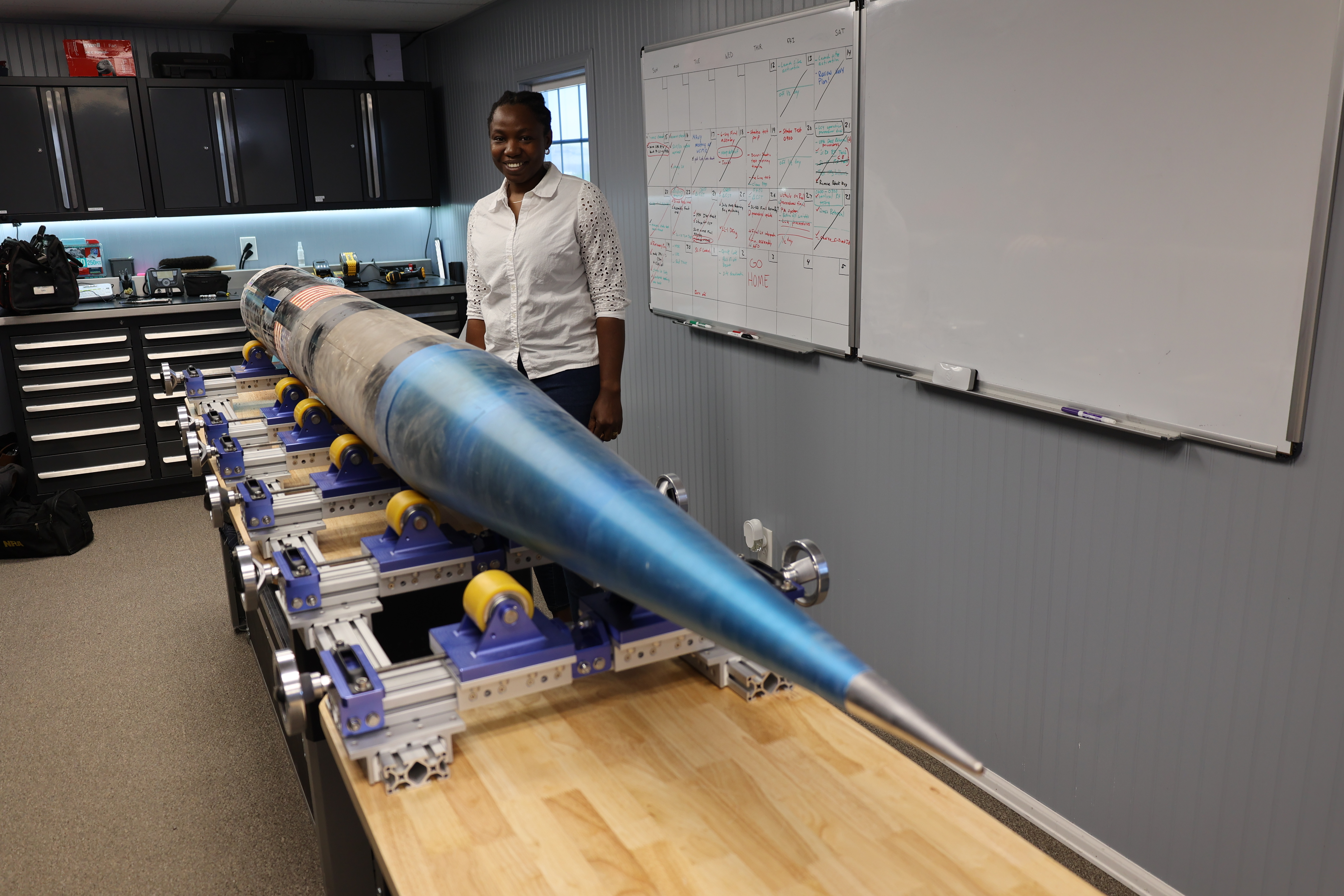 The rocket SL15 which Ph.D. student Funmilola Nwokocha used for experiments for her
dissertation to be completed Dec. 2024.
The rocket SL15 which Ph.D. student Funmilola Nwokocha used for experiments for her
dissertation to be completed Dec. 2024.
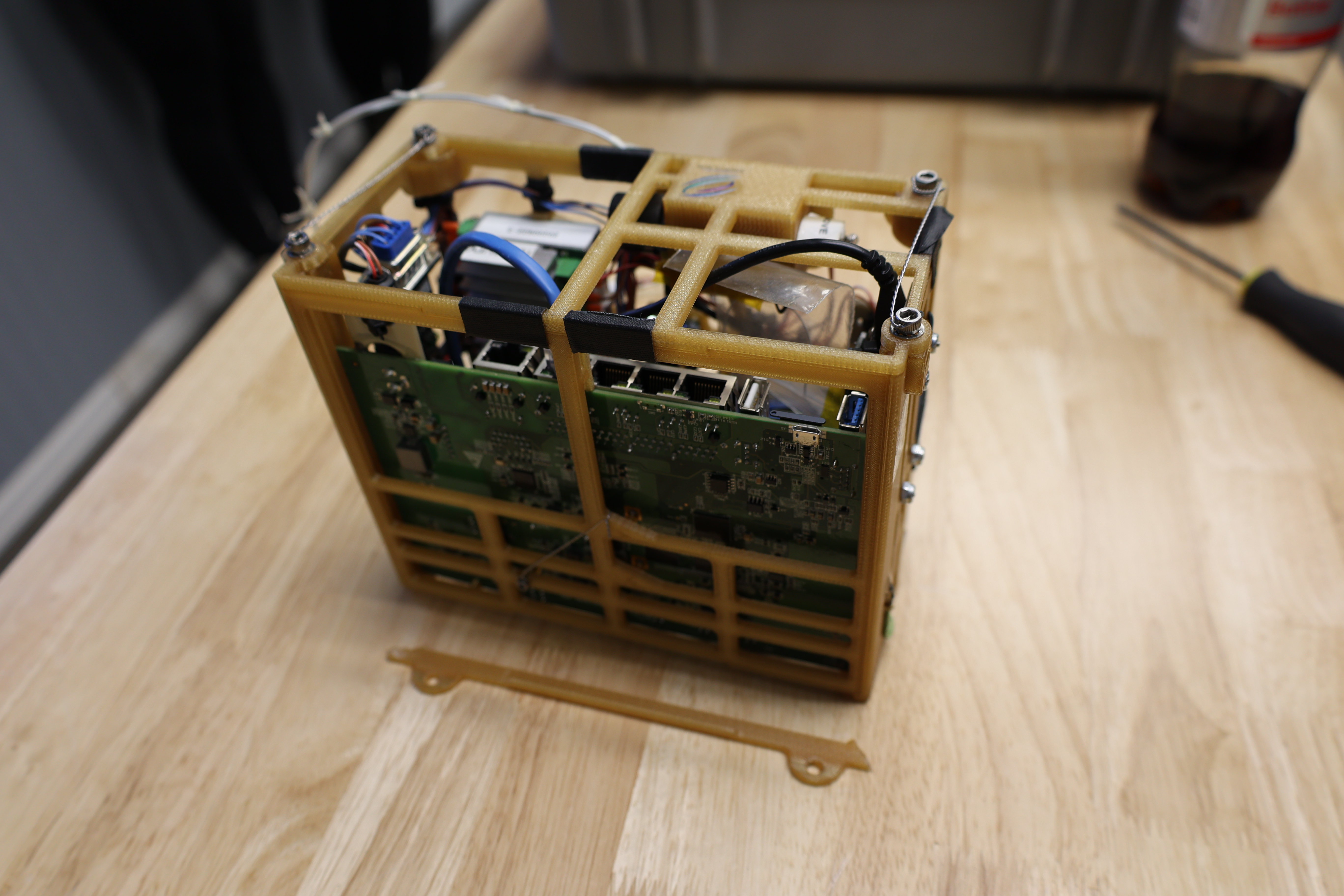
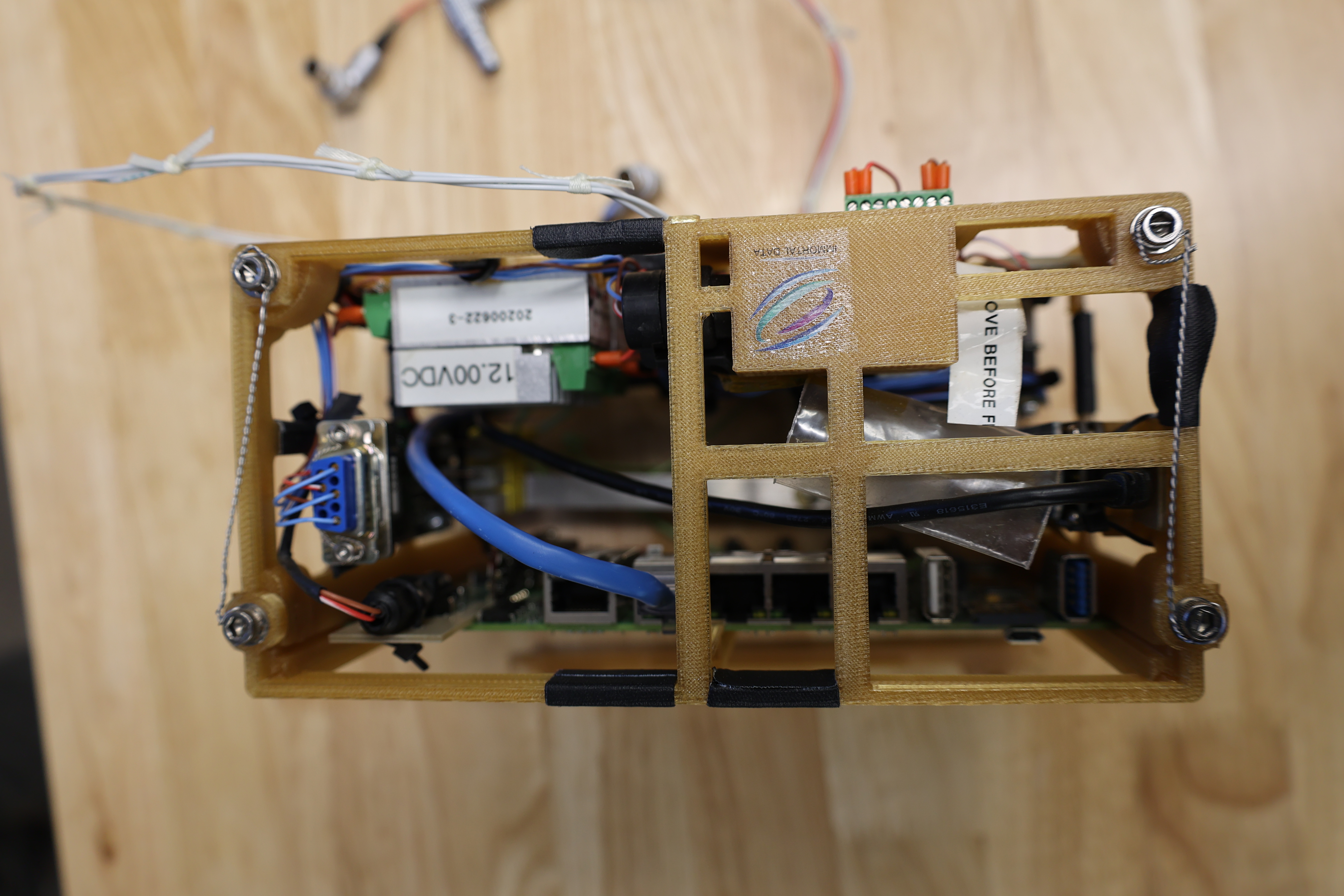
The device that was on SL15