NMT Astronomy Club: Rare viewing opportunity for comet that appears every 80,000 years
Oct. 10, 2024
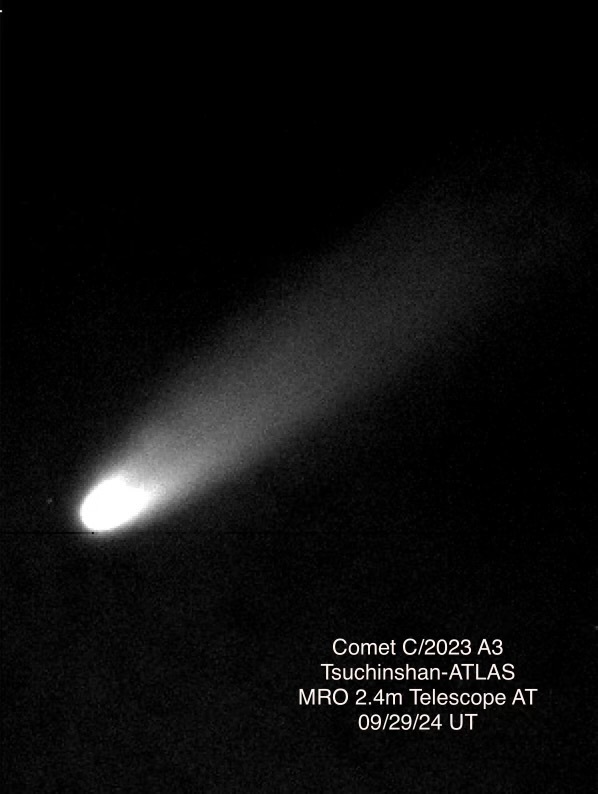
Look up in the sky! It’s a bird! It’s a plane! No, it’s … C2023 A3! Or Tsuchinshan-ATLAS. A comet. Not just any comet—this one hasn’t been in the solar system for 80,000 years. It’s set to appear in the night sky on Oct. 12, before it whips around the sun and appears again Oct. 19 on its path back out into the cosmos.
According to the NMT Astronomy Club, there are two good windows for observation: Friday, Oct. 12 and Saturday, Oct. 19. The NMT Astronomy Club will host a viewing party on Oct. 19 at Etscorn Observatory.
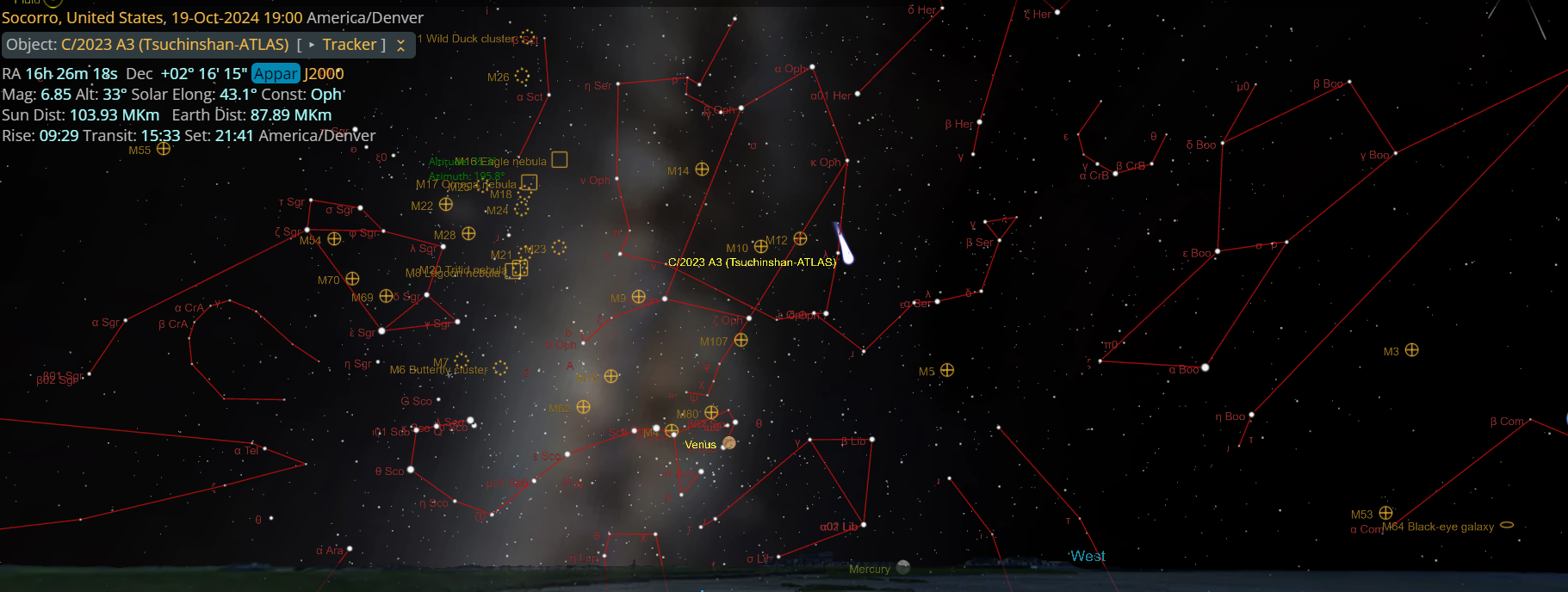
To view it on Saturday, Oct. 12, senior astronomy major and club member Zachary Goodrich suggests the following: “Around 7 p.m., look west-southwest and up about 10 degrees above the horizon. The comet's nucleus should appear to be a bright fuzz. Conservatively, the tail will be considerably dimmer and therefore, capturing the tail entirely requires photographic equipment. But you will still be able to see some of the tail with the naked eye.”
Goodrich also predicts that the waxing moon may hamper observations, possibly washing out details.
For Oct. 19 viewing party, which is part of NMT's 49ers homecoming events, the Etscorn Observatory will track Tsuchinshan-ATLAS and be open to the public from 7 to 9 p.m. The NMT Astronomy Club is hosting, and will be on hand for questions and assistance observing this celestial event.
Goodrich describes how to view the comet from the backyard on Oct. 19. “Around 7 p.m., look west-southwest and up about 30 degrees above the horizon. The overall brightness will be reduced from previous nights and photographic equipment will be required to see the majority of the comet. However, the moon rising later should leave a window of darkness which would provide favorable viewing conditions.”
Comets are made up of ice, dust and rocky material, not to be confused with asteroids, which are made up of metals and rocky material. A comet is a celestial object consisting of a nucleus of ice and dust and, when near the sun, a “tail” of gas and dust particles appears in the light, pointing away from the sun. Both asteroids and comets were formed early in the history of the solar system about 4.5 billion years ago.
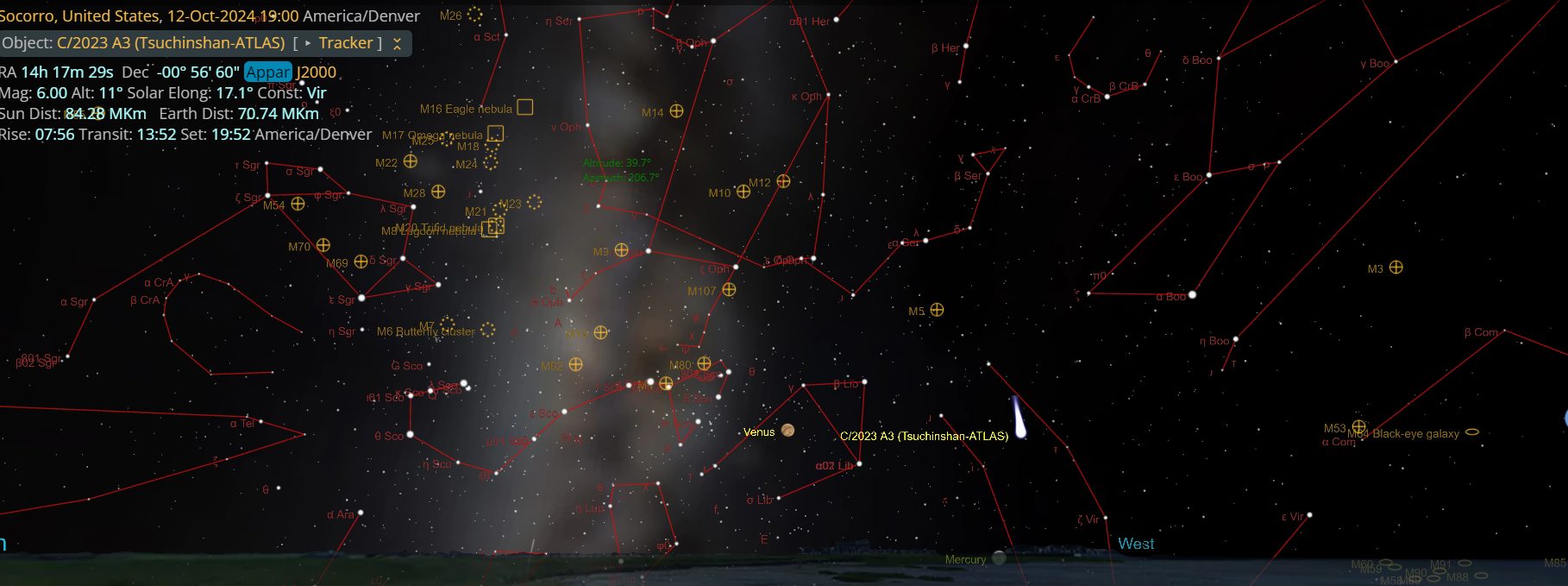
Where to look on Oct. 12 (above) and Oct. 19 (below)