Carlsbad Brine Well Remediation Project Completed
June 2, 2022
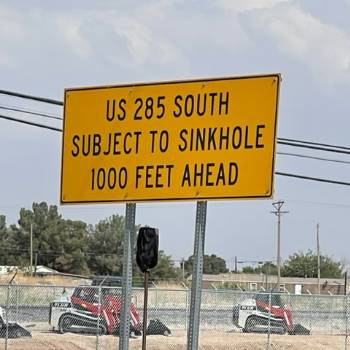
CARLSBAD, N.M. – The National Cave and Karst Research Institute, an institute of New Mexico Tech, hosted a celebration of the completion of the Carlsbad Brine Well Remediation Project at its headquarters June 1, 2022. Gov. Michelle Lujan Grisham, New Mexico Energy, Minerals and Natural Resources Department (EMNRD) Secretary Sarah Cottrell Propst, legislators, and community leaders were on hand to mark the occasion of the conclusion of a remediation project that affected public safety, economic development, and transportation in the Carlsbad area.
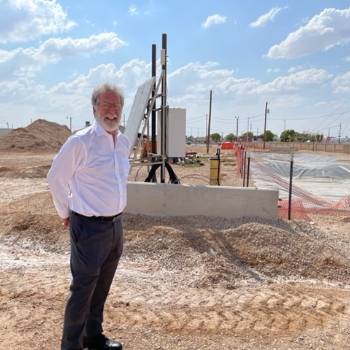
Dr. George Veni, National Cave and Karst Research Institute executive director, served as chairman of the project’s initial technical advisory committee. He emceed the project completion celebration, welcoming community leaders, business representatives, engineers, and state staff who participated in the effort.
“I’m glad we were part of the process,” he said. “A lot of good people helped make it happen.”
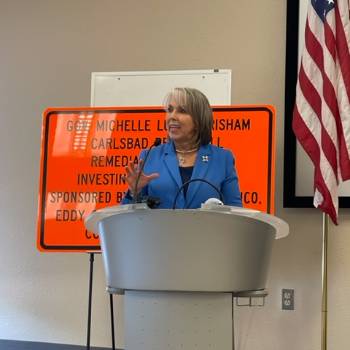
The Carlsbad Brine Well Remediation Project, which dates back to an initial sinkhole discovery in the Carlsbad area in 2008, involved years of coordination by city, county, and state staff to secure the funding for filling a brine well cavity on the south side of Carlsbad – a potential future sinkhole at a busy intersection near train tracks and a canal. Calling it a “scary situation” with public safety and economic development implications, EMNRD Secretary Cottrell Propst said leaders faced a “unique, complex, and unusual” project, and “had to get creative and find the money” for remediation.
An engineering firm was contracted to oversee the remediation, which involved injecting a foam-sand slurry to fill in the void to prevent a sinkhole forming at a key Carlsbad intersection. On-site monitoring of the area will continue for two more years to detect any movement.
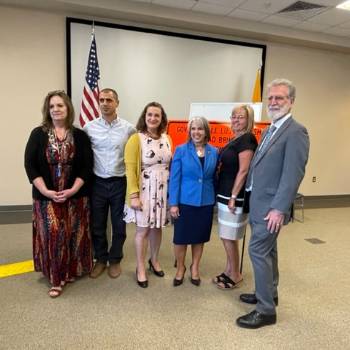
Gov. Lujan Grisham said the project presented a very significant challenge for those working on it, who she said were “not intimidated by the complexity of the problem.” She thanked state and local policymakers and officials who “stayed the course and made this a priority.”