CCUS-STRP

| Department of Energy - Office of Fossil Energy and Carbon Management |
| University Training and Research (UTR) Program |
 |
The Southwest CCUS Training and Research Partnership (CCUS-STRP)
The CCUS-STRP, an initiative led by New Mexico Tech and funded by the Department of
Energy, is dedicated to establishing a university training and research consortium
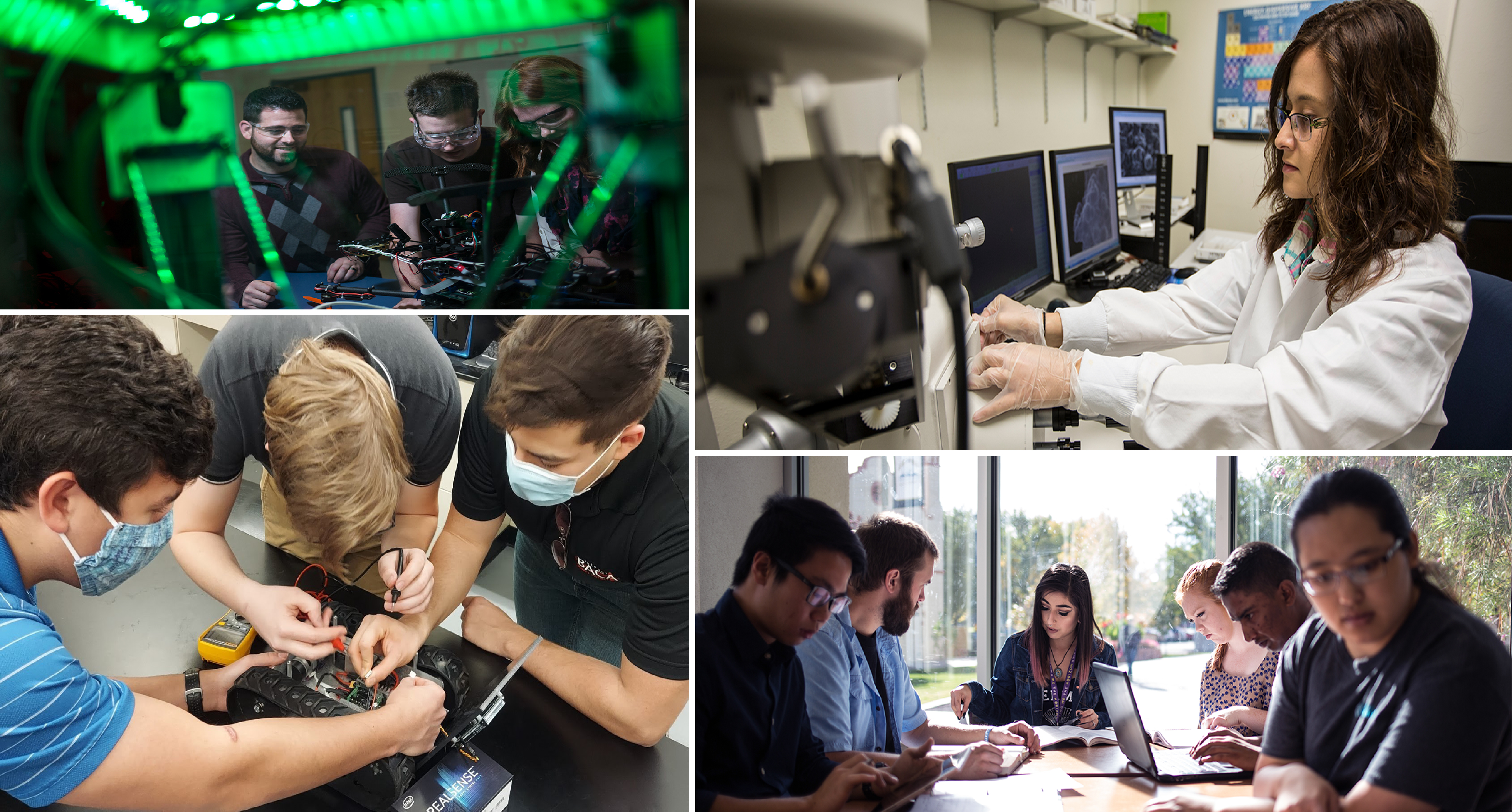
focused on carbon capture, utilization, and storage (CCUS). Our mission is to provide
hands-on research opportunities, internships, and specialized training for undergraduate
students.
Partner Institutions:
The CCUS-STRP collaborates with a network of institutions to create opportunities
for students. Our partners include:
- Southwestern Indian Polytechnic Institute
- Southeast New Mexico College
- San Juan College
- Prairie View A&M University
- New Mexico State University
We anticipate selecting approximately 10 trainees for the program each year. Accepted
trainees will participate in a 10-week CCUS-STRP internship program, which includes
a stipend, housing allowance, travel assistance, and mentorship
Summer 2025 Visiting Students
| |
| Cain Carmona |
|
Cain is a 20-year-old who comes from Farmington, New Mexico, to participate in the
CCUS-STRP internship. He is a rising junior who plans to attend New Mexico Institute
of Mining and Technology in the fall of 2025. Cain is a petroleum engineering major
with hopes of graduating in May 2027. During Cain’s time at the internship, he was
focused on researching the wettability of reservoirs
and their relevance to underground CO 2 storage. Local communities will benefit because
CO2 will be taken out of the atmosphere. His efforts help advance technology in Carbon
Capture, Utilization, and Storage by better understanding an aspect of underground
CO 2 storage.
Cain’s experience during the CCUS-STRP internship was excellent. He says, “I had a
good time, and I gained valuable research and presenting skills I could use in the
future”.
|
|
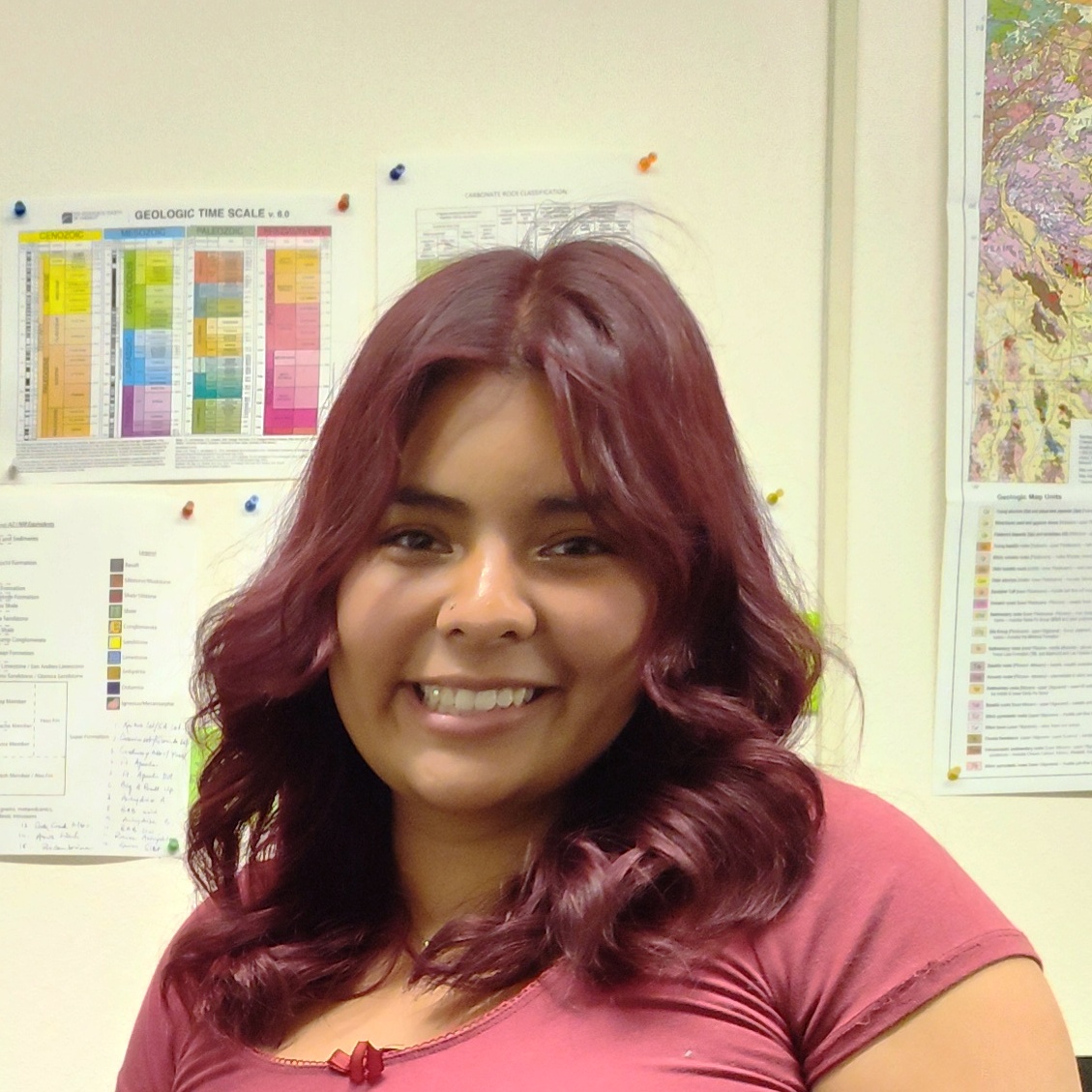 |
| Maritza Carrillo |
|
Maritza will be an undergraduate student at Texas Tech University, where she will
major in Environmental Engineering.
Maritza's research is centered on the geochemistry and characterization of the San
Andres carbonate in the Permian Basin. This research demonstrates the feasibility
of utilizing carbonate rocks as a reservoir for carbon dioxide storage and sequestration.
Additionally, the findings of this study highlight potential benefits to the community.
Securely storing carbon dioxide in the San Andres carbonate can lead to a decrease
in greenhouse gases in the atmosphere, which can mitigate climate change.
Maritza is grateful to have been given the opportunity to participate in the research
internship. Going into college, she feels this opportunity has only further affirmed
her decision to become an environmental engineer and has sharpened skills such as
researching, writing reports, and working with others. She feels she acquired valuable
experiences and has gained extensive knowledge from this internship, as well as from
her mentors and advisors.
|
 |
| Mohammadreza Sadeghmoghaddam |
|
Mohammadreza is an undergraduate senior studying Mechanical Engineering at the New
Mexico Institute of Mining and Technology, and is participating in the CCUS-STRP program.
He has graduated from New Mexico Junior College with an associate’s degree in Arts
and an associate’s degree in Science. He is interested in the function of general
processes, with little limit to any particular subject.
Mohammadreza’s research focus lies upon the Morrow Sandstone Formation in the Permian
Basin, with reference to its behavior during carbon dioxide sequestration. As the
Permian Basin is a major global petroleum production site, generating understanding
of its CCUS capabilities will provide the Permian Basin as a possible option for storage.
Mohammadreza hopes that this will further CCUS efforts and limit the effects of greenhouse
gases until neutrality is achieved by other means.
Mohammadreza has enjoyed the CCUS-STRP program thus far, noting that his biggest challenge
was the adjustment to an academic workplace. He recognizes the learning curve from
regular assignments during the semester to researching, writing reports, and presenting
topics weekly. After the adjustment, Mohammadreza feels prepared for nearly any challenge
that would be presented to him.
|
|